
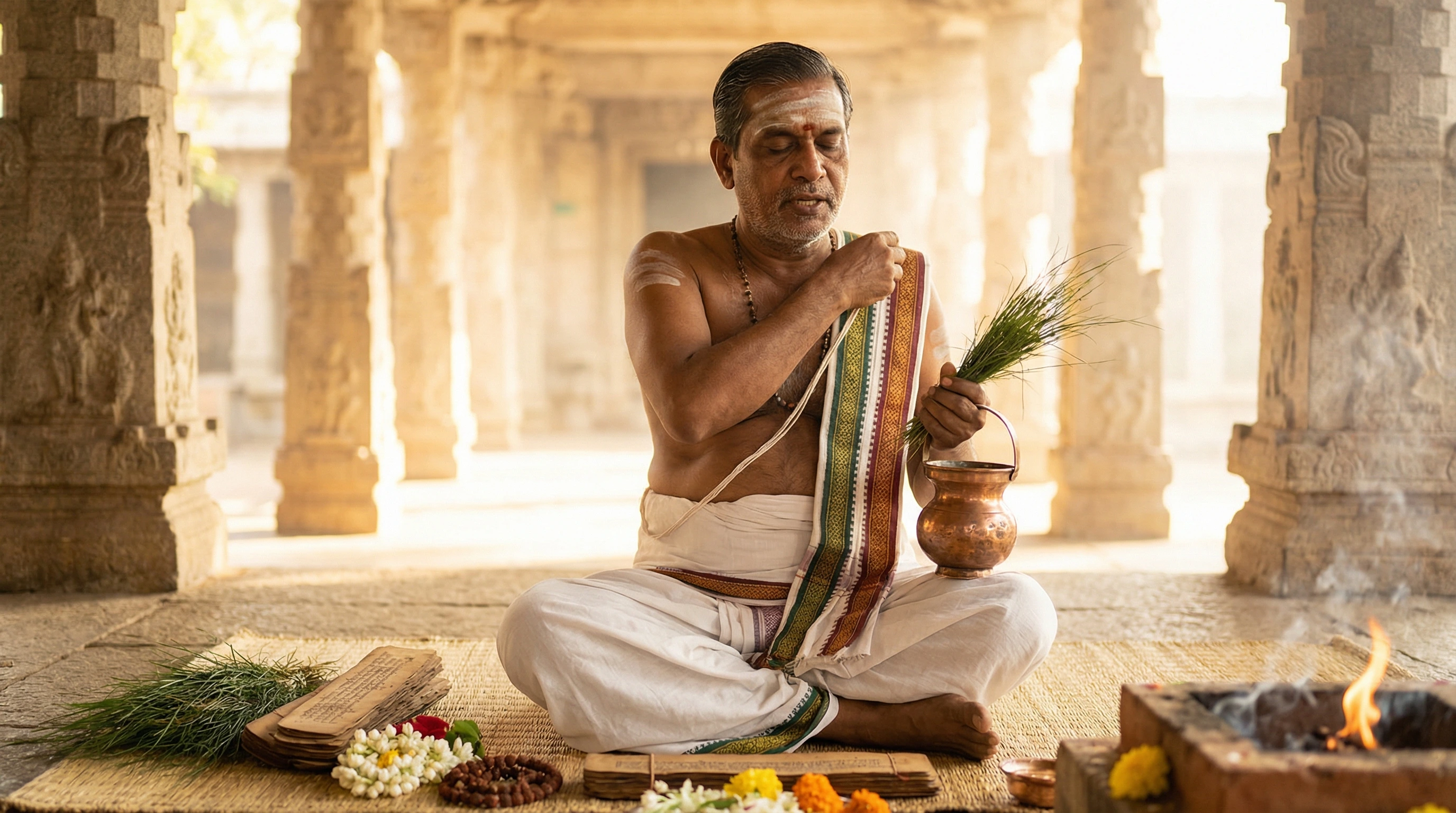
Avani Avittam Meaning and Significance
Avani Avittam, also known as Upakarma, is an important Vedic observance associated with the renewal of spiritual discipline, Vedic learning, and the sacred duties represented by the Yajnopavita (Poonal).
Key Takeaways
- Vedic Recommencement: Upakarma marks the formal beginning of a new cycle of Veda Adhyayanam (Vedic study and recitation).
- Poonal Renewal: Replaces the old Yajnopavita (sacred thread) with a new one as a symbol of inner purification and recommitment to dharma.
- Lord Hayagriva & Gayatri Japam: Honors Lord Hayagriva (restorer of the Vedas) and continues with Gayatri Japam for mental purification.
Quick Overview: What is Avani Avittam & Upakarma?
According to Vedic tradition, Avani Avittam (commonly known as Upakarma) is an annual ritual for spiritual renewal, self-introspection, and recommitment to Vedic learning and ethical living.
- Name Significance: "Avani" refers to the Tamil month (Aug–Sep), "Avittam" is the Dhanishta Nakshatra, and "Upakarma" means commencement of Vedic study.
- Poonal Changing: Replacing the Yajnopavita symbolizes purification from past omissions and readiness for a disciplined new year.
- Gayatri Japam: Performed on the day following Upakarma to reinforce focus, mantra purity, and spiritual strength.
Understanding the Meaning and Significance of Avani Avittam
Avani Avittam, also known as Upakarma, is an important Vedic observance associated with the renewal of spiritual discipline, Vedic learning, and the responsibilities represented by the sacred thread.
Although the most visible part of Avani Avittam is the changing of the Yajnopavita, commonly called the Poonal or sacred thread, the observance carries a much deeper meaning. It is traditionally viewed as an opportunity to reflect on the previous year, seek purification for mistakes, and recommit oneself to Vedic study, discipline, and dharmic living.
The word Avani refers to a month in the Tamil calendar (generally falling between August and September), and Avittam is the Dhanishta Nakshatra. The Sanskrit word Upakarma means a beginning or commencement—specifically referring to the formal recommencement of Veda Adhyayanam (the study and recitation of the Vedas).
The Spiritual Significance of Avani Avittam & Upakarma
Explore the core Vedic pillars, ritual symbolisms, and traditional dimensions that make Upakarma a transformative annual observance.
1. Renewal of Vedic Learning
- Recommencing Veda Adhyayanam: The primary purpose of Upakarma is the formal recommencement of studying and chanting the Vedas.
- Oral Lineage Preservation: Honors the ancient tradition of preserving Vedic knowledge through direct oral transmission from Guru to student.
- Responsibility to Future Generations: Reminds each generation of its duty to protect and pass down sacred scriptures.
- Continuous Intellectual Growth: Inspires devotees to dedicate time every day to spiritual study and reflection.
2. Purification and Prayaschitta
- Prayaschitta Mantras: Special prayers recited to seek forgiveness for errors, omissions, or unintentional lapses during the past year.
- Maha Sankalpam: Introspective declaration performed to cleanse mind, speech, and body of karmic impurities.
- Fresh Spiritual Start: Provides a dedicated occasion to leave past shortcomings behind and start anew.
- Moving Forward with Awareness: Strengthens resolve to adhere strictly to moral principles in daily living.
3. Gratitude to the Rishis (Rishi Tarpanam)
- Water Offerings (Tarpanam): Offerings made to ancient seers (Rishis) who received and recorded Vedic mantras.
- Unbroken Lineage Reverence: Acknowledges that sacred wisdom has reached us through an unbroken lineage of seers.
- Cultivating Filial Humility: Expresses deep gratitude for the heritage of Vedic mantras and spiritual philosophy.
- Connecting with Seer Grace: Invokes divine seers' blessings for clarity of mind and intellectual illumination.
4. Recommitment to Dharma
- Responsibility Over Privilege: Reminds wearers that the sacred thread represents duties and self-discipline rather than status.
- Ethical Living: Encourages renewed commitment to truthfulness, self-control, cleanliness, and non-violence.
- Daily Sandhyavandanam: Re-energizes dedication to performing daily morning, noon, and evening prayers.
- Harmonious Conduct: Guides personal conduct towards family, community, and the broader society.
5. Continuity Between Generations
- Community Worship: Observed together by fathers, sons, Gurus, and students in temples or holy riverbanks.
- Multigenerational Bonding: Creates a visible, sacred connection between elders and younger members of the family.
- Preserving Cultural Identity: Ensures authentic Vedic procedures and values are observed without dilution.
- Inspiring Young Minds: Instills respect for tradition and spiritual duty in younger generations.
6. Meaning of the Sacred Thread (Poonal)
- Yajnopavita / Janeu Symbolism: Worn after Upanayanam, representing eligibility for Vedic study and rituals.
- Three Strands (Gunas & Debts): Symbolizes control over Sattva, Rajas, and Tamas gunas, and honoring Deva, Rishi, and Pitru Rina.
- Replacing Old Thread: Changing the thread with Yajnopavita Dharana Mantra signifies inner renewal.
- Constant Reminder: Acts as a visible anchor around the chest reminding the wearer of pure conduct.
7. Association with Lord Hayagriva
- Embodiement of Knowledge: Lord Hayagriva (horse-headed form of Lord Vishnu) is worshipped as the deity of wisdom.
- Restoration of the Vedas: Commemorates Lord Hayagriva retrieving the stolen Vedas from demons Madhu and Kaitabha.
- Auspicious Day for Learning: Avani Avittam is considered ideal for beginning new educational pursuits and mantras.
- Divine Guidance: Seeking Lord Hayagriva's grace grants sharp intellect, memory power, and spiritual wisdom.
8. Connection with Gayatri Japam
- Observed the Next Day: Gayatri Japam is traditionally performed on the day immediately following Upakarma.
- Focus on Gayatri Mantra: Devotees perform 1008 or 108 recitations of the supreme Gayatri Mantra.
- Purification of Thought: Cleanses mental clutter, enhances concentration, and elevates spiritual vibration.
- Reinforcing Upakarma Vows: Strengthens the inner resolve made during sacred thread replacement.
Why Do Upakarma Dates Differ Across Veda Shakhas?
Followers of the Rig Veda, Yajur Veda, and Sama Veda observe Upakarma on different dates according to specific astrological rules, lunar days, and Nakshatras prescribed in the Grihya Sutras:
Yajur Veda Upakarma
Yajur Veda followers observe Upakarma on the full moon day (Purnima) of the Shravana month (August–September). It is commonly known as Shravana Purnima Upakarma and coincides with Raksha Bandhan.
Rig Veda Upakarma
Rig Veda followers observe Upakarma on the day when Shravana Nakshatra prevails during the Shravana month. Depending on panchangam calculations, this date may coincide with or differ slightly from Yajur Veda Upakarma.
Sama Veda Upakarma
Sama Veda followers observe Upakarma on the Hasta Nakshatra during the Bhadrapada month (generally falling in August–September), adhering to distinct Grihya Sutra instructions.
Gayatri Japam Day
Observed universally on the day following Upakarma by all Veda Shakha practitioners to chant the Gayatri Mantra 1008 or 108 times for mental clarity and spiritual power.
Who Observes Avani Avittam & Why Guidance Matters
According to tradition, Avani Avittam is observed by those who have undergone Upanayanam and wear the Yajnopavita. Proper priestly guidance ensures authentic performance:
Upanayanam Initiates
All individuals who wear the Yajnopavita (Poonal) observe this annual ceremony to renew their vows of Vedic learning and daily Sandhyavandanam.
Veda Shakha Specific Procedures
The mantras, Sankalpam, and ritual sequence vary according to Veda Shakha (Rig, Yajur, Sama) and family Sampradaya.
Authentic Priestly Guidance
Qualified Vedic priests ensure that proper Sankalpam is declared, mantras are recited correctly, and ritual steps are fulfilled without omissions.
Remote & NRI Participation
Devotees residing abroad or unable to attend physically can participate through live online temple services with personalized Sankalpam in their name.
Frequently Asked Questions on Avani Avittam
Concise, faith-based answers to common questions about Avani Avittam, Upakarma, and sacred thread renewal.