
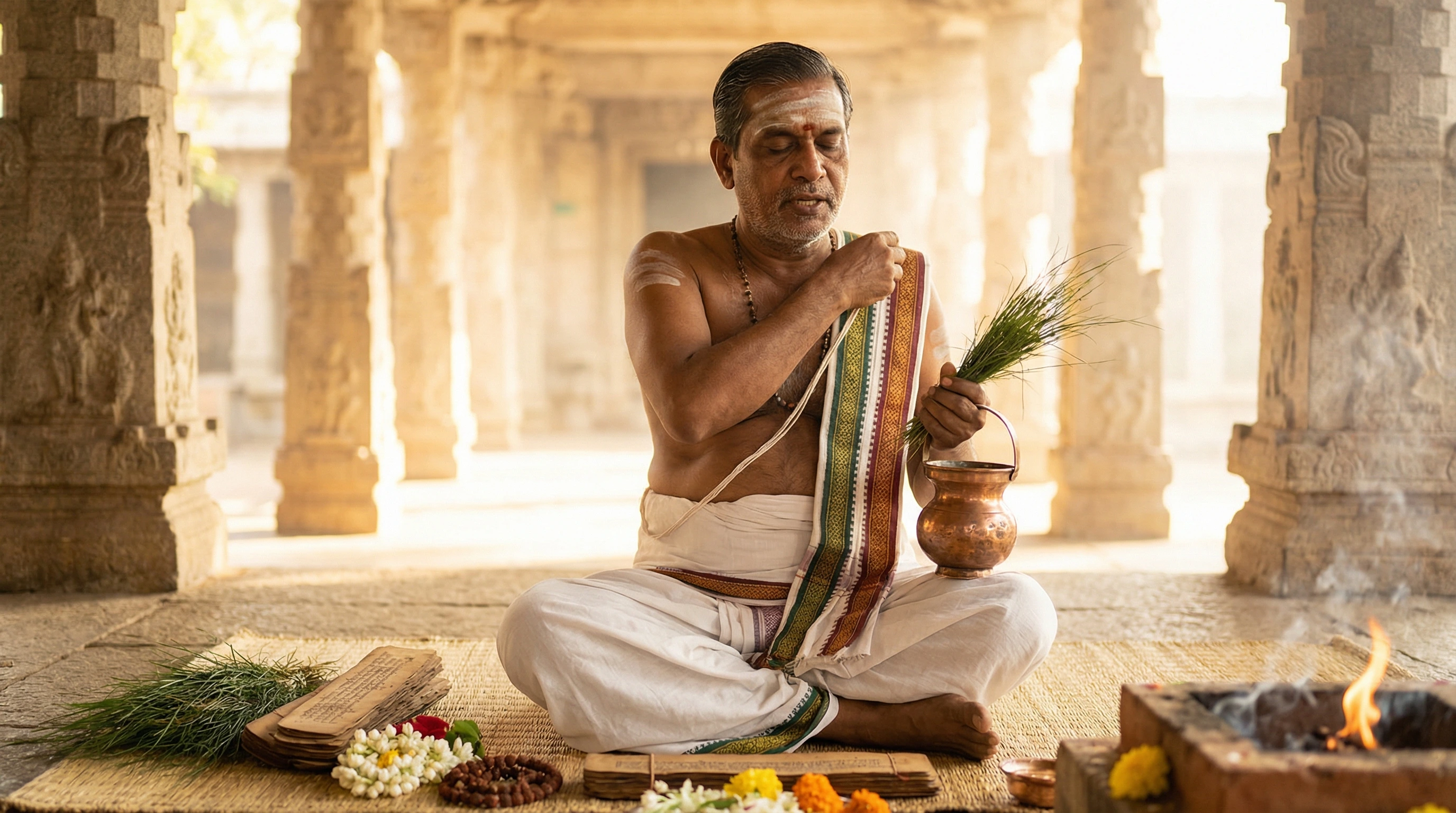
How Is Avani Avittam Performed?
Upakarma Rituals and
Procedure Explained
Avani Avittam, traditionally known as Upakarma, is an annual Vedic observance centred on purification, renewal of the sacred thread (Poonal / Yajnopavita), and the formal recommencement of Vedic study under priest guidance.
Key Takeaways
- 14 Main Rituals: Complete procedure covering Aachamanam, Anga Kavacham, Ganapathi Dhyaanam, Pranayaamam, Brahma Yagnam, Kaamokaarishin Japam, Yajnopaveedham & Upaveedham, Kaandarishi Tarpanam, Navagraha Tarpanam, Gayatri Japam, and Abhivaadhanam with Rakshai.
- Beyond Thread Changing: Replacing the Poonal is an external symbol of inner purification, seeking forgiveness for past omissions, and renewing Vedic learning.
- Veda Shakha Variations: Exact procedures, mantras, and timings differ across Rig Veda, Yajur Veda, and Sama Veda traditions.
- Priest Guidance: Essential for declaring correct Sankalpam, reciting specific mantras, and ensuring authentic observance.
Quick Overview: What Happens During Avani Avittam?
During Avani Avittam (Upakarma), eligible participants perform a structured sequence of Vedic rituals focused on four principal purposes:
- Purification: Seeking forgiveness for past errors through KamokarsheenJapam and Prayaschitta prayers.
- Rishi Gratitude: Offering water oblations (Kanda Rishi Tarpanam) to seers who preserved the Vedas.
- Sacred Thread Renewal: Wearing the new Yajnopavita while reciting prescribed Vedic mantras under priest direction.
- Vedarambham: Formally recommencing Vedic recitation and receiving blessings from Gurus and elders.
Overview of Avani Avittam Upakarma Rituals
Avani Avittam, traditionally known as Upakarma, is an annual Vedic observance centred on purification, renewal of the sacred thread, and the formal recommencement of Vedic study.
Many people recognise Avani Avittam primarily as the day on which the old Poonal (Yajnopavita) is replaced. However, changing the sacred thread is only one part of a broader sequence of Vedic rituals. The complete procedure includes prayers for purification, Maha Sankalpam, Rishi Tarpanam, Yajnopavita Dharanam, Vedic recitation (Vedarambham), Homam, and blessings from the Guru or Vedic priests. (Ramanuja)
The exact procedure differs according to the participant’s Veda Shakha (Rig, Yajur, Sama), Sutra, Sampradaya, family tradition, and stage of life (Brahmachari vs. Grihastha). Therefore, Avani Avittam should be performed under the guidance of qualified Vedic priests rather than treated as one universal procedure for everyone.
The 14 Main Avani Avittam Rituals Explained
Explore the complete step-by-step 14 procedural sequence prescribed in Vedic Grihya Sutras for authentic Upakarma performance.
1. Aachamanam
- Water Purification: Sipping small quantities of water while reciting divine names (Achyutaya Namah, Anantaya Namah, Govindaya Namah) to purify speech and internal organs.
- Physical & Spiritual Cleansing: Prepares the body, mind, and speech before entering sacred Vedic rites.
- Vedic Ritual Order: Standard mandatory prelude performed at the start of every Vedic ceremony.
- Priest Guidance: Executed according to prescribed mudras and water sipping counts.
2. Anga Kavacham
- Body & Sense Shielding: Touching sensory parts of the body (eyes, nose, ears, shoulders, and head) with sacred mantras.
- Spiritual Protection: Establishes a protective energetic armor (*Kavacham*) over physical organs and subtle centers.
- Focus Alignment: Stabilizes mental focus and energy flow throughout the ritual.
- Sacred Touch: Invokes divine presence into every part of the participant's body.
3. Ganapathi Dhyaanam
- Invoking Lord Ganesha: Chanting *Suklambaradharam Vishnum...* to pray for removal of all obstacles (*Vighnas*).
- Auspicious Commencement: Ensures the smooth, obstacle-free completion of the Upakarma observance.
- Temple Tapping Ritual: Lightly tapping temples as per Vedic tradition to stimulate subtle spiritual channels (*Nadis*).
- Universal Reverence: Performed first in every authentic Hindu pooja and samskara.
4. Pranayaamam
- Breath Control: Regulated breathing exercises performed while mentally reciting Gayatri and Vyahritis.
- Pranic Balance: Harmonizes life breath (Prana), calms the mind, and purifies internal subtle channels.
- Triple Alignment: Unifies body, breath, and mind before solemn declarations (*Sankalpam*).
- Mental Clarity: Enhances receptivity and spiritual vibration for sacred mantra recitations.
5. Brahma Yagnam
- Homage to the Vedas: Offering worship to the Vedas, Rishis, Devas, and Pitrus as part of daily Pancha Maha Yagnas.
- Vedic Passage Recitation: Chanting foundational mantras from Rig, Yajur, or Sama Veda Samhita, Aranyaka, and Sutras.
- Knowledge Preservation: Expresses reverence to the continuous lineage of Vedic seers and teachers.
- Water Oblations: Offering sacred water with Darbha grass to ancient sages and ancestral seers.
6. Kaamokaarishin Japa Sankalpam
- Solemn Declaration of Intent: Reciting specific Sankalpam for Kamokarsheen Manyurakarsheen Japam under priest guidance.
- Lineage & Time Parameters: Announcing year, season, lunar day (Tithi), Gotra, Veda Shakha, and participant's name.
- Purification Intent: Expressing resolve to perform japa for atonement of sins committed through desire or anger.
- Preparatory Mindset: Establishes deep introspective repentance before changing the sacred thread.
7. Kaamokaarishin Japam
- Atonement Mantra Chanting: Reciting *Kamokarsheed Manyurakarsheed Namo Namah* 1008 or 108 times.
- Inner Atonement: Acknowledging mistakes driven by uncontrolled desire (*Kama*) or anger (*Krodha/Manyu*).
- Karmic Cleansing: Releases mental guilt and restores spiritual alignment for the coming year.
- Prerequisite Purification: Cleanses the inner self before placing the holy Yajnopavita.
8. Sankalpam for Yagnopavidha Dhaaranam
- Sacred Thread Renewal Declaration: Reciting *Yajnopavita Dharana Mahasankalpam* led by the priest.
- Lineage & Ancestry: Invocations declaring participant's Pravara, Gotra, Sutra, Veda Shakha, and identity.
- Astrological Alignment: Explicitly stating the time, place, and divine purpose of receiving the new thread.
- Spiritual Re-dedication: Formally renewing commitments to daily Sandhyavandanam and Vedic duties.
9. Yajnopaveedham and Upaveedham
- Core Thread Renewal Rite: Discarding the old thread and donning the new Yajnopavita while chanting *Yajnopavitam paramam pavitram...*.
- Sacred Position (Upaveedham): Wearing the thread over the left shoulder crossing to the right hip.
- Thread Count Variations: Brahmacharis wear 1 thread (3 strands); Grihasthas wear 2 or 3 threads (6–9 strands).
- Visible Spiritual Symbol: Reaffirms moral discipline, purity, and sacred responsibilities.
10. Kaandarishi Tarpanam with Sankalpam
- Oblations to Kanda Rishis: Declaring Sankalpam and offering water with sesame/rice to the Kanda Rishis of the Vedas.
- Veda-Specific Sages: Expressing gratitude to Prajapati, Soma, Agni, Visvedevas, and section seers of the Vedas.
- Lineage Gratitude: Honoring ancient seers who compiled, preserved, and handed down the sacred scriptures.
- Distinct Upakarma Rites: Specifically performed during Upakarma to refresh knowledge lineage connection.
11. Navagraha Kesavadhi Tarpanam
- Oblations to Planets & Devas: Offering water oblations to the Nine Celestial Planets (Navagrahas) and 24 Names of Vishnu (Kesava, Narayana, Madhava...).
- Planetary Peace: Seeking auspicious planetary influences, health, and harmony for the family.
- Devotional Reverence: Honoring the divine presences that maintain cosmic order and sustain life.
- Karmic Obstacle Relief: Mitigates planetary doshas and brings spiritual peace.
12. Suklam barath, Pranayama, Sankalpam, Nyasam & Gayathri Japam
- Invocation & Nyasam: Reciting Suklambaradharam, performing Pranayama, and executing Gayatri Japa Sankalpam with Anga & Kara Nyasam.
- Gayatri Japa Recitation: Chanting the supreme Gayatri Mantra (1008 or 108 times) under priest guidance.
- Intellectual Illumination: Invoking divine light to guide intellect and thoughts (*Dhiyo Yo Nah Prachodayat*).
- Spiritual Empowerment: Re-energizes internal spiritual vitality and mental focus.
13. Prathikshina Namaskaram & Dhik Devatha Vandhanam
- Circumambulation (Pradakshina): Performing clockwise turns while offering prayers for forgiveness and divine grace.
- Directional Deities Salutation: Offering prostrations to guardians of the 8 directions (Indra, Agni, Yama, Nirriti, Varuna, Vayu, Kubera, Isana).
- Directional Protection: Invoking cosmic deities to safeguard health, home, and spiritual focus.
- Complete Submission: Expresses total surrender and reverence to cosmic divine order.
14. Abhivaadhanam, Argyam, Rakshai
- Lineage Recitation (Abhivadaye): Reciting Pravara, Gotra, Sutra, Shakha, and Name while touching elders' or priest's feet for blessings.
- Surya Argyam: Offering water oblations to Surya Bhagavan with devotion and reverence.
- Sacred Raksha Application: Applying holy Rakshai/Pavitram on wrist/forehead for divine protection.
- Guru & Elder Blessings: Concludes the 14-step ritual with deep humility and receiving Akshata blessings from priests and elders.
General Order, Materials & Traditional Attire
Essential details for participants preparing to observe Avani Avittam:
14-Step Procedural Sequence
1. Aachamanam • 2. Anga Kavacham • 3. Ganapathi Dhyaanam • 4. Pranayaamam • 5. Brahma Yagnam • 6. Kaamokaarishin Japa Sankalpam • 7. Kaamokaarishin Japam • 8. Sankalpam for Yagnopavita Dharanam • 9. Yajnopaveedham & Upaveedham • 10. Kaandarishi Tarpanam with Sankalpam • 11. Navagraha Kesavadhi Tarpanam • 12. Gayatri Japam & Nyasam • 13. Prathikshina & Dhik Devatha Vandhanam • 14. Abhivaadhanam, Argyam & Rakshai.
Required Pooja Materials
New Yajnopavita (Poonal), Panchapatra & Uddharani, clean water, Darbha grass, Akshata, fresh flowers, Sandalwood paste, Turmeric, Kumkum, Betel leaves, Areca nuts, Fruits, Dakshina, and Homam materials when applicable.
Traditional Attire
Clean and sacred traditional attire suitable for Vedic rites, commonly consisting of a clean Veshti (Dhoti) and Angavastram worn after completing the ritual bath.
Gayatri Japam (Day After)
Observed on the day following Upakarma, where eligible participants recite the Gayatri Mantra 1008 or 108 times under proper guidance for mental purification and spiritual strength.
Why Proper Vedic Priest Guidance Matters
Avani Avittam includes Veda-specific mantras, Sankalpams, and procedural nuances that require learned guidance:
Correct Sankalpam & Mantras
priests ensure that the correct Sankalpam (declaring Gotra, Shakha, and Tithi) is performed and mantras are chanted accurately.
Shakha-Specific Procedural Rules
Rig, Yajur, and Sama Veda traditions follow distinct sequence order and Grihya Sutra instructions that should not be mixed.
First-Time Participants (Prathama Upakarma)
Special guidance is provided for those performing Upakarma for the first time after Upanayanam, ensuring correct thread count and vows.
Live Priest-Guided Online Option
Devotees living outside their hometown or abroad can participate through live priest-led video services with personalized Sankalpam and material lists.
Frequently Asked Questions on Upakarma Procedure
Concise, faith-based answers to common questions about Avani Avittam rituals and step-by-step procedure.