
Naga Panchami Rituals:Puja Steps, Offerings & Traditions
Discover the sacred rituals of Naga Panchami - from Abhishekam and mantra chanting to traditional offerings and prayers. Learn how this ancient festival is celebrated and performed.
Book Naga Panchami Puja 2026Book Now Explore Naga Panchami BenefitsExplore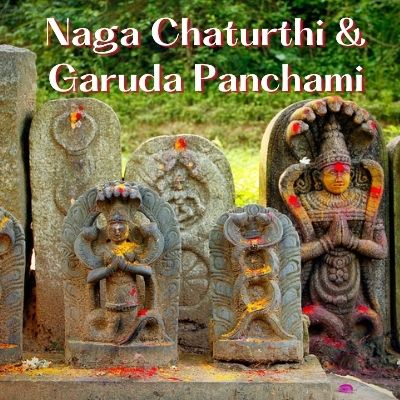






What are the main rituals performed on Naga Panchami?
Naga Panchami is celebrated through sacred rituals dedicated to Naga Devtas. Devotees follow traditional practices like Naga Puja, Abhishekam, mantra chanting, and offerings to express their devotion and seek divine blessings.
The main rituals performed on Naga Panchami include:
- Worshipping Naga Devtas
- Performing Naga Abhishekam
- Offering Sacred Items
- Chanting Mantras & Prayers
- Observing Naga Panchami Vrat
Devotees offer prayers to Naga Devtas by worshipping Naga idols in temples or at home with devotion and respect. Abhishekam, sacred offerings, mantra chanting, fasting, and listening to the Naga Panchami Vrat Katha are followed according to tradition.
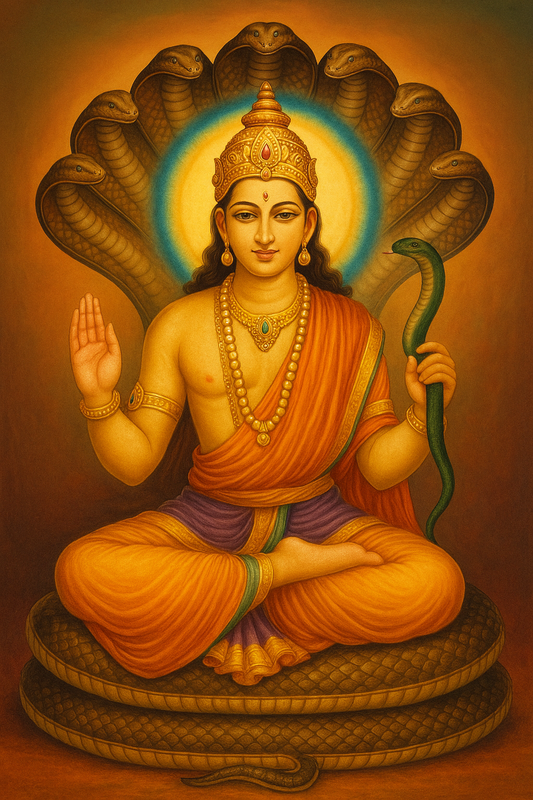
Want these rituals performed through a personalized priest-led puja?
Explore the Complete Puja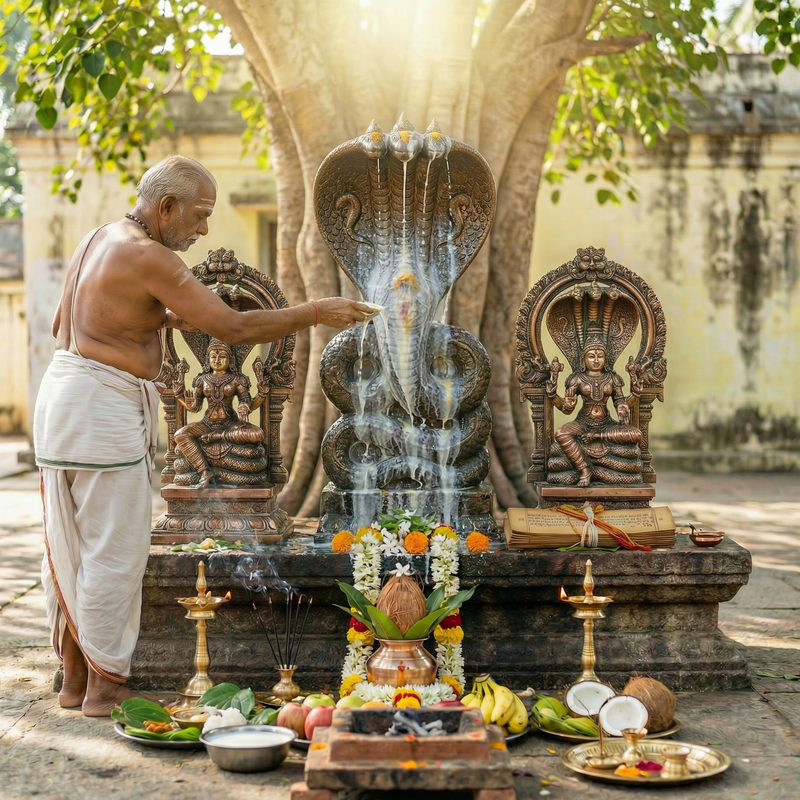
How is Naga Panchami Celebrated?
Naga Panchami begins with purification and preparation. Devotees clean their homes, prepare the puja space, and offer prayers to Naga Devtas.
In temples, special rituals are performed with Abhishekam, Vedic chanting, flower decorations, Deepa worship, and traditional offerings.
The day represents devotion, gratitude, and respect towards the divine serpent tradition.
Abhishekam
Traditional sacred bathing of the Naga idol.
Vedic Chanting
Prayers and mantras offered with focused devotion.
Deepa Worship
Lighting the lamp as an expression of reverence.
Traditional Offerings
Flowers and sacred items offered with gratitude.
Seeking Naga Devata blessings through a traditional Abhishekam? Learn about the puja
Naga Panchami Puja Procedure: Step-by-Step
The puja begins with a personalized Sankalpam. The devotee’s name, rashi, nakshatra, gothram, and prayer intention are recited before the Naga Devatas.
The Naga Devata is worshipped through Abhishekam as an expression of purification, devotion, and surrender.
Through sacred Vedic prayers, the divine presence of the Naga Devatas is respectfully invoked for the puja.
The priest chants the 108 sacred names of the Naga Devatas to seek divine protection, peace, and blessings.
Sacred incense and an oil lamp are offered to the Naga Devatas as symbols of purification, divine light, and devotion.
Aarthi is performed with a sacred flame while prayers are offered for the devotee and their family.
Special prayers are performed to seek relief from Sarpa Dosha, Rahu–Ketu influences, ancestral karmic obstacles, and repeated difficulties in life.
The puja concludes with divine blessings for protection, family harmony, prosperity, health, and spiritual well-being.
Have these sacred procedures performed with your personalized Sankalpam.
Book Personalized PujaWhy is Naga Abhishekam Performed?

Naga Abhishekam is an important part of Naga Panchami worship. Through this ritual, devotees express their devotion and seek blessings from Naga Devtas. Traditionally, devotees perform Abhishekam seeking:
Protection
Prayerful devotion seeking divine protection.
Peace of Mind
A sacred moment for calm and focused prayer.
Family Wellbeing
Offerings made for harmony and wellbeing at home.
Spiritual Growth
A devotional practice that supports spiritual discipline.
Seeking Naga Devata blessings through a traditional Abhishekam? Learn about the puja
Naga Panchami Fasting Rules
Many devotees observe fasting on Naga Panchami as an expression of devotion. Fasting practices may differ based on family traditions and regional customs.
Common fasting foods include fruits, milk, coconut, Sabudana preparations, and traditional vrat foods.
Usually avoided are non-vegetarian food, alcohol, and certain foods based on tradition. Fasting helps devotees spend more time in prayer and maintain spiritual discipline.
Fruits
A simple and common fasting choice.
Milk & Coconut
Traditional offerings and fasting foods.
Sabudana Preparations
Prepared according to individual fasting customs.
Traditional Vrat Foods
Follow family and regional traditions with devotion.
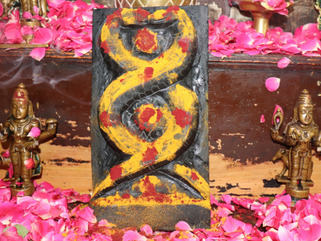
Explore the complete puja
Naga Panchami Mantras for Worship
During Naga Panchami, devotees chant prayers dedicated to Naga Devtas. A commonly chanted mantra is:
ॐ नमो अस्तिक मुनये नमः
This mantra is traditionally associated with the Naga worship tradition.
Let the sacred mantras be chanted with your name and Sankalpam.
View Personalized Puja
Experience Traditional Naga Panchami Puja with Vedic Procedures
Experience Traditional Naga Panchami Puja with Vedic Procedures
Book Your Personalized Naga Panchami Puja 2026Book Now
Frequently Asked Questions
Naga Panchami Puja is performed with Sankalpam, Naga Abhishekam, Aavahanam, 108 Naga Ashtothram chanting, Dhoopam, Deepam, Aarthi, and special prayers to the Naga Devatas.
The main rituals include personalized Sankalpam, Abhishekam, invocation of the Naga Devatas, 108 sacred-name chanting, lamp and incense offerings, Aarthi, Sarpa Dosha Nivaran prayers, and final blessings.
Yes. Devotees may perform simple prayers, light a lamp, offer flowers, and worship a Naga idol at home. For a complete Vedic procedure, the puja can be performed under the guidance of an experienced priest.
Milk is traditionally offered to Naga idols as an expression of devotion, purity, and respect. Devotees may also offer turmeric, flowers, and prayers to the Naga Devatas.
Devotees generally follow a peaceful and disciplined routine, avoid non-vegetarian food, and refrain from harming snakes, animals, nature, or other living beings.
Yes. Sankalpam is performed using the devotee’s name, rashi, nakshatra, and gothram. It formally states the devotee’s intention and the purpose of performing the puja.
During the traditional puja, priests chant the 108 Naga Ashtothram—the 108 sacred names of the Naga Devatas—along with prayers for protection, peace, and dosha relief.
Yes. A personalized Naga Panchami Puja can be performed online through live video access. The priest performs the Sankalpam and rituals using the devotee’s personal details.
The puja is commonly performed by devotees seeking Naga Devata blessings, family harmony, ancestral peace, and relief from Sarpa Dosha, Rahu–Ketu influences, or repeated obstacles.
Common offerings include milk, turmeric, flowers, incense, lamps, and other traditional puja items offered respectfully to a Naga idol or sacred Naga representation.
Celebrate Naga Panchami 2026 with Sacred Vedic Rituals
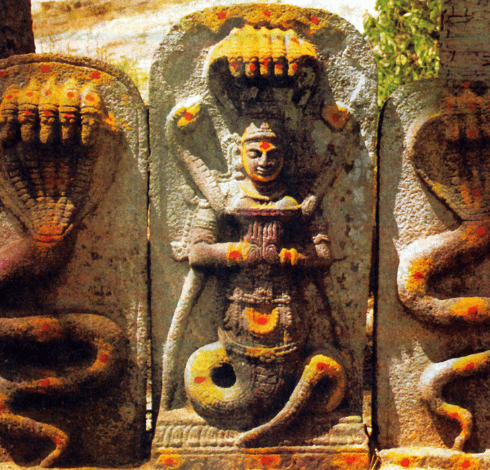
Naga Panchami Meaning & Significance
Understand what Naga Panchami means, why it is celebrated, and the spiritual importance of worshipping Naga Devtas.
Explore Meaning
Benefits of Naga Panchami Puja
Explore spiritual, devotional, natural, and traditional astrological perspectives.
Explore Benefits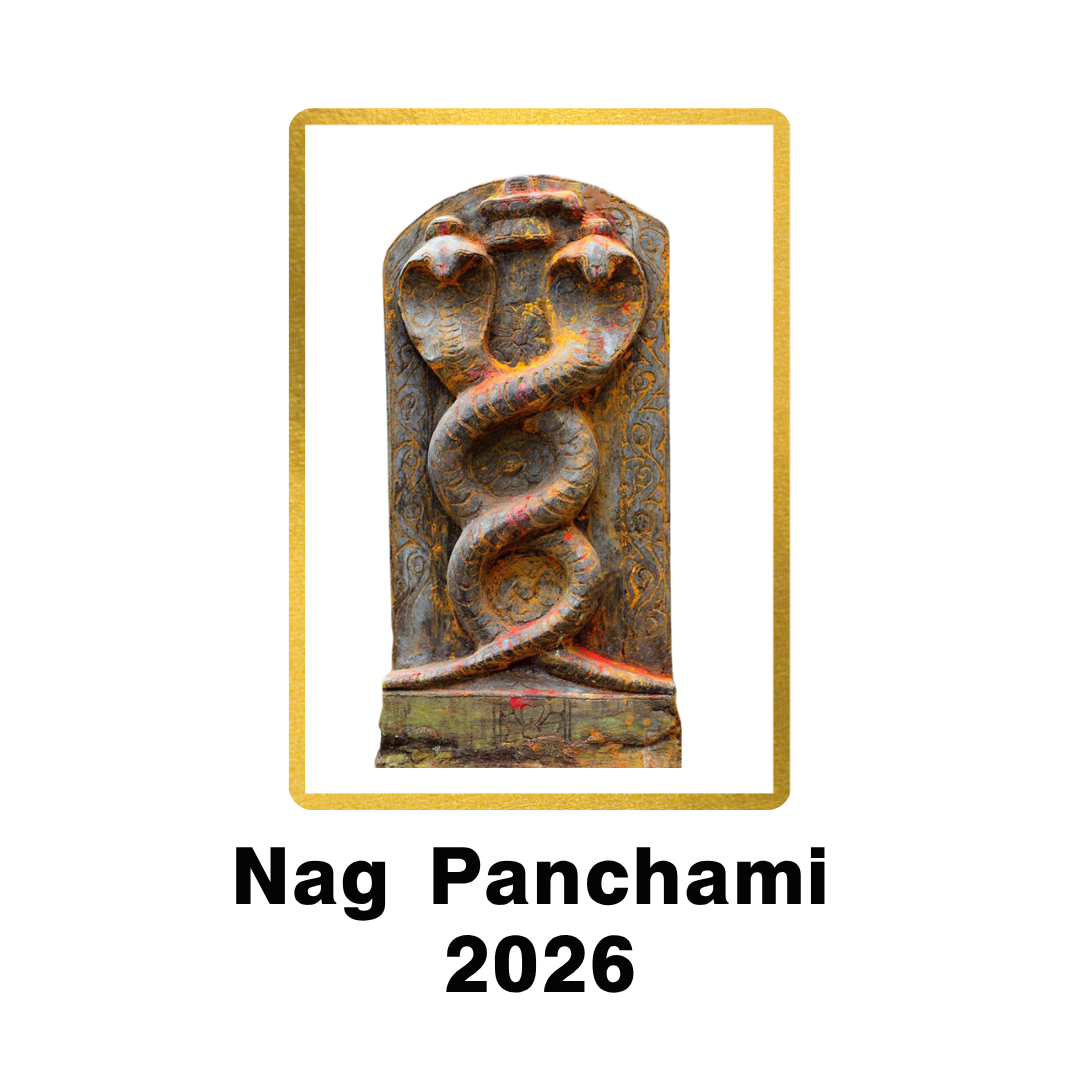
Naga Panchami 2026 Puja
View Naga Chaturthi and Garuda Panchami puja options with experienced priests.
Book Puja