












Decode Your Shani: A Complete Guide to Shani Vakri, Sade Sati, Saturn’s Effects and Vedic Remedies
Shani is one of the most misunderstood planets in Vedic astrology.
Many devotees hear about this planetary phase, sometimes traditionally referred to as Vakra Shani, but may not clearly understand what Shani Vakri means or why this period is considered so important in Vedic astrology.
A challenging Shani period does not affect every person in the same way. Its results depend on the individual horoscope, including Shani’s house, zodiac sign, strength, planetary aspects, Nakshatra, Dasha, Bhukti, and current transit.
This complete guide will help you understand Shani Vakri and Saturn Retrograde in Vedic astrology, Sade Sati, Saturn’s influence in the twelve houses, career-related effects, common misconceptions, and traditional Vedic remedies.
Quick Answer: What Does Shani Represent in Vedic Astrology?
Shani represents:
- Karma and responsibility
- Discipline and patience
- Hard work and consistency
- Delays and long-term results
- Justice and accountability
- Service and humility
- Structure and limitations
- Maturity through experience
Shani may slow down certain areas of life, but delay does not always mean failure.
In many cases, Shani asks a person to become more disciplined, correct weak foundations, accept responsibility, and prepare properly before receiving lasting results.
What Is Shani Vakri?
When Saturn appears to move backwards from the Earth’s perspective, it is known as Shani Vakri. You can explore the meaning, effects, dates and significance of Shani Vakri in our detailed guide.
1. Understanding Vakri Shani in Vedic Astrology
In Vedic astrology, Vakri Shani refers to the period when Saturn appears to move backwards from the Earth’s perspective.
Saturn does not physically reverse its direction. This phase, widely known as Saturn Retrograde, is an apparent astronomical movement caused by the relative positions and speeds of Earth and Saturn.
Many devotees hear about this planetary phase, sometimes traditionally referred to as Vakra Shani, but may not clearly understand what Shani Vakri means or why this period is considered so important in Vedic astrology.
During this retrograde motion, people may be encouraged to review unfinished responsibilities, delayed decisions, financial habits, career commitments, relationships, and past actions.
What Can Shani Vakri Bring Attention To?
Shani Vakri may highlight:
- Unfinished responsibilities
- Recurring financial patterns
- Delayed career decisions
- Weak business structures
- Family obligations
- Relationship boundaries
- Legal or administrative matters
- Emotional pressure
- Past mistakes requiring correction
- Long-term goals that need better planning
Shani Vakri is often less about beginning something completely new and more about reviewing, restructuring, correcting, and strengthening what already exists.
2. What Is the Spiritual Meaning of Shani Vakri?
Spiritually, the Vakri Shani period can be viewed as a profound time of inner review. To fully comprehend the significance of Vakri Shani, one must look beyond external events and observe their internal responses.
External progress may feel slower, but internal understanding can become deeper during this planetary transit.
This period may encourage a person to ask:
- Am I avoiding an important responsibility?
- Am I repeating the same mistake?
- Is my financial structure sustainable?
- Am I expecting results without sufficient preparation?
- Have I ignored discipline in an important area?
- Do I need to correct an old decision?
- Am I building something that can last?
Shani’s influence is traditionally associated with truth, accountability, and consequences.
It may reveal where patience is weak, where discipline is missing, or where a person is carrying responsibilities that can no longer be avoided.
Important Guidance
Shani Vakri should not automatically be interpreted as a sign of punishment.
For some people, it may create pressure. For others, it may provide an opportunity to repair old problems, complete pending work, develop maturity, and create a stronger foundation.
3. Why Does Shani Vakri Affect Every Person Differently?
The same Saturn retrograde does not produce identical results for everyone.
Two people may experience the same Shani Vakri period very differently because their birth charts are different.
Its influence may depend on:
- The house through which Shani is transiting
- The zodiac sign occupied by Shani
- Shani’s position in the birth horoscope
- The person’s Lagna or ascendant
- The Moon sign
- Shani’s Nakshatra
- Planetary aspects and conjunctions
- The running Dasha and Bhukti
- The strength of the relevant house lord
- The person’s current age and life circumstances
For one person, Shani Vakri may influence career.
For another, it may bring attention to marriage, finances, family responsibilities, health routines, property, education, business, or spiritual development.
Therefore, general zodiac predictions should be treated as broad guidance. A complete horoscope assessment is required for personalised interpretation.
4. Shani Vakri vs Sade Sati: What Is the Difference?
Shani Vakri in Vedic astrology and Sade Sati are not the same astrological condition, although both involve the influence and transit of Saturn.
Shani Vakri
Vakri Shani occurs when Saturn appears to move backwards during its transit.
It generally happens for a period of several months and can influence different areas of life depending on the house and sign through which Saturn is moving.
Sade Sati
Sade Sati is the approximately seven-and-a-half-year period during which Saturn transits:
- The zodiac sign before the natal Moon sign
- The natal Moon sign
- The zodiac sign after the natal Moon sign
It is calculated primarily from the Moon sign in the birth horoscope.
Shani Vakri and Sade Sati Comparison
| Factor | Shani Vakri | Sade Sati |
|---|---|---|
| Meaning | Saturn’s apparent backward movement | Saturn’s transit around the natal Moon sign |
| Duration | Usually several months | Approximately seven and a half years |
| Frequency | Occurs regularly during Saturn’s transit | Occurs at longer intervals in a person’s life |
| Main Calculation | Current Saturn transit | Natal Moon sign and Saturn transit |
| Possible Focus | Review, delay, correction and restructuring | Emotional maturity, responsibilities and major life lessons |
| Effects | Depends on the house, sign and horoscope | Depends on Moon sign, chart strength, Dasha and other factors |
| Remedy Approach | Personal discipline, prayer and horoscope-based remedies | Long-term patience, responsibility, worship and practical correction |
Can Shani Vakri Happen During Sade Sati?
Yes.
Saturn can become retrograde while a person is experiencing Sade Sati.
During such a period, certain Saturn-related matters may feel more intense, repetitive, delayed, or emotionally demanding. However, the actual results still depend on the complete horoscope.
Sade Sati should not automatically be treated as a period of guaranteed suffering. It can also bring maturity, professional responsibility, spiritual growth, and long-term restructuring.
5. Is Saturn Retrograde Always Negative?
No. Saturn Retrograde is not always negative.
This is one of the most common misunderstandings in astrology.
Shani is often feared because its results may be slow, demanding, or connected with responsibility. However, the same influence can help a person develop qualities that support lasting success.
Positive Possibilities of Shani Vakri
Shani Vakri may support:
- Greater self-discipline
- Better financial planning
- Stronger professional boundaries
- Completion of long-pending work
- Correction of past mistakes
- Increased patience
- Emotional maturity
- Responsible decision-making
- Deeper spiritual reflection
- Sustainable success built over time
Shani may delay a result until a person develops the maturity needed to handle it.
For example, a career opportunity may take longer than expected, but the delay may help the person gain experience, improve skills, or avoid an unstable position.
When Can Shani Vakri Feel Difficult?
The period may feel challenging when a person:
- Avoids responsibility
- Repeats the same financial mistake
- Resists necessary change
- Depends on shortcuts
- Neglects important commitments
- Builds on an unstable foundation
- Refuses to learn from previous experiences
Shani’s pressure often becomes stronger where structure, patience, accountability, or discipline is missing.
6. How Shani Works in Each of the Twelve Houses
The house occupied or influenced by Shani indicates the area of life where patience, discipline, responsibility, limitation, or long-term development may become important.
These are broad interpretations. The final result depends on the complete horoscope.
Shani in the First House: The first house represents personality, physical appearance, confidence, health, and approach to life. The person may mature early or feel older than others of the same age.
Shani in the Second House: The second house relates to family, speech, savings, values, and accumulated wealth. Stable wealth may develop through patience and consistent planning.
Shani in the Third House: The third house represents courage, communication, siblings, skills, and self-effort. Progress may initially be slow, but persistence can produce lasting results.
Shani in the Fourth House: The fourth house represents home, mother, property, emotional security, and inner peace. The person may need to build emotional security gradually.
Shani in the Fifth House: The fifth house relates to education, children, intelligence, creativity, romance, and past-life merit. Results may come slowly but can become stable with maturity.
Shani in the Sixth House: The sixth house represents debts, diseases, disputes, competition, service, and daily work. When well-supported, Shani in the sixth house may give persistence against competitors and difficult circumstances.
Shani in the Seventh House: The seventh house represents marriage, partnerships, contracts, and public dealings. Marriage may require patience, communication, and long-term commitment.
Shani in the Eighth House: The eighth house relates to transformation, joint finances, inheritance, hidden matters, sudden events, and longevity. This placement can encourage spiritual depth and inner resilience.
Shani in the Ninth House: The ninth house represents higher education, father, teachers, faith, fortune, and long-distance travel. Faith may become stronger through lived experience rather than blind belief.
Shani in the Tenth House: The tenth house represents profession, status, authority, responsibilities, and public reputation. This placement can support long-term professional authority when discipline is maintained.
Shani in the Eleventh House: The eleventh house represents income, gains, networks, ambitions, elder siblings, and long-term goals. Gains may arrive later but can remain stable for longer periods.
Shani in the Twelfth House: The twelfth house relates to expenses, isolation, sleep, foreign countries, spiritual liberation, and hidden fears. This placement may turn the person inward and encourage spiritual reflection.
7. The Meaning of Shani’s Delay
One of the main qualities associated with Shani is delay. However, delay does not always mean denial.
Shani may delay a result because:
- More preparation is required
- The foundation is not yet stable
- The timing is not suitable
- An important responsibility is being ignored
- The person needs more experience
- The goal requires greater discipline
- The current path may not support long-term growth
What Does Shani Test?
Shani may test patience, consistency, honesty, responsibility, commitment, financial discipline, emotional maturity, respect for time, and willingness to correct mistakes.
A person may repeatedly face the same lesson until the underlying behaviour changes.
For example, repeated debt may not be solved only by obtaining more money. Shani’s lesson may involve spending discipline, repayment planning, avoiding unnecessary loans, or accepting financial responsibility.
Delay Can Create Stronger Success
Fast success may disappear quickly when there is no structure behind it.
Shani-related success is often associated with experience, endurance, strong systems, careful planning, responsible leadership, and long-term stability.
The result may arrive late, but the person may be better prepared to protect and maintain it.
8. What Happens When Shani Aspects Your Career House?
In Vedic astrology, the tenth house is strongly connected with career, authority, professional reputation, responsibilities, and public life.
When Shani occupies or aspects the tenth house or its lord, professional matters may require additional patience and discipline.
Possible Career Experiences
A person may experience delayed promotion, increased workload, greater responsibility without immediate recognition, difficult relationships with authority figures, slow salary growth, job insecurity, repeated professional restructuring, feeling undervalued, delays in business expansion, or pressure to prove competence.
These experiences do not automatically mean permanent career failure. Shani often rewards consistency, professional discipline, reliability, and ethical conduct.
Positive Career Results
When supported by the horoscope, Shani’s influence may bring long-term career stability, authority gained through experience, strong administrative ability, respect from senior professionals, leadership responsibilities, expertise in technical or structured fields, success after sustained effort, and a reputation for reliability.
Practical Guidance During Career Pressure
During a demanding Shani period:
- Avoid impulsive resignation
- Document your work and achievements
- Improve professional skills
- Maintain workplace discipline
- Communicate responsibilities clearly
- Avoid conflict with authority
- Review contracts carefully
- Create a long-term career plan
- Combine spiritual remedies with practical action
Astrology can provide guidance, but professional decisions should also consider financial responsibilities, industry conditions, skills, and personal circumstances.
9. Shani Vakri Timeline and Important Dates
A Shani Vakri timeline page should be updated every year because retrograde dates and transit positions change.
Before considering the exact dates or traditional observances, it helps to first understand the Shani Vakri period and how Saturn’s retrograde movement is traditionally interpreted in Vedic astrology.
The annual guide should include the date Shani becomes retrograde, the zodiac sign of the retrograde, Nakshatra transitions, the date Shani returns to direct motion, important Saturn transit dates, Shani Jayanti, Amavasya observances associated with Shani worship, Saturdays during the retrograde period, effects for each Moon sign or ascendant, and general spiritual practices for the period.
Suggested Annual Page Format
Shani Vakri Begins: Explain the date, time, zodiac sign, and general astrological significance.
Important Transit Changes: Describe any sign, Pada, or Nakshatra changes that may alter the nature of the period.
Shani Becomes Direct: Explain when Saturn returns to direct motion and what devotees may focus on afterward.
Who May Feel the Period More Strongly?: Mention the Moon signs, ascendants, Dasha periods, or horoscope conditions that may require closer assessment.
Recommended Spiritual Practices: Provide balanced guidance involving prayer, discipline, charity, temple worship, and personalised horoscope-based remedies.
10. Five Common Myths About Lord Shani
Fear-based content has created many misunderstandings about Lord Shani. Here are five common myths and the corresponding facts.
Myth 1: Shani Only Gives Suffering
Fact: Shani is associated with discipline, karma, justice, patience, responsibility, and
long-term growth. Its periods can feel demanding, but they can also help a person develop maturity,
stability, and resilience.
Myth 2: Sade Sati Destroys Everyone’s Life
Fact: Sade Sati does not affect every individual in the same way. Its results depend on the
Moon sign, Saturn’s strength, planetary aspects, Dasha, Bhukti, and the overall horoscope. Some
people experience pressure, while others receive career responsibility, spiritual development,
property, professional stability, or major life transformation.
Myth 3: Every Delay Is Caused by Shani
Fact: Delays can arise from many astrological and practical factors. Other planets, weak
house lords, unfavourable Dasha periods, lack of preparation, financial limitations, health
conditions, or external circumstances may also contribute. A horoscope should be assessed before
attributing every problem to Saturn.
Myth 4: One Common Remedy Works for Everyone
Fact: The most suitable remedy depends on the individual horoscope and life situation. A
mantra, charity practice, fasting method, temple ritual, or personalised pooja may be appropriate
for one person but not necessarily for another.
Myth 5: Shani Pooja Guarantees Immediate Results
Fact: Shani Pooja is a devotional Vedic practice performed to seek divine grace, inner
strength, protection, discipline, and relief from obstacles. It should not be treated as a
guaranteed or instant solution. Spiritual remedies work best when combined with responsibility,
ethical conduct, patience, and practical action.
11. Traditional Vedic Remedies for Shani
Traditional remedies are generally intended to encourage devotion, humility, discipline, service, and self-correction. The appropriate remedy should ideally be selected according to the individual horoscope.
Saturday Worship
Devotees may offer prayers to Lord Shani on Saturdays with sincerity and discipline. The focus should be on devotion rather than fear.
Mantra Chanting
Shani mantras may be chanted respectfully with proper pronunciation and regularity. A commonly recited mantra is: Om Sham Shanicharaya Namah. Mantra practice should be performed calmly and consistently.
Charity and Service
Traditional Shani remedies often emphasise helping elderly people, workers, people facing poverty, people with physical difficulties, those carrying heavy responsibilities, and animals in need. Charity should be performed sincerely, without expecting immediate personal reward.
Personal Discipline
Some of the most meaningful Shani remedies are practical: repaying debts responsibly, avoiding dishonest income, respecting workers, fulfilling promises, controlling unnecessary expenses, maintaining punctuality, accepting family responsibilities, and developing consistency.
Temple Worship
Devotees may visit a temple, offer prayers, participate in archana, or perform a personalised Shani Pooja according to their spiritual needs.
12. When Should You Consider a Personalised Shani Pooja?
A personalised Shani Pooja may be considered when a person is experiencing recurring or prolonged difficulties and wishes to seek traditional spiritual support.
Understanding the traditional meaning of Vakri Shani can help devotees approach the pooja with greater clarity and devotion, rather than performing it solely out of fear or confusion.
These may include:
- Repeated financial pressure
- Recurring debt cycles
- Career stagnation
- Delayed promotions
- Business obstacles
- Legal delays
- Relationship pressure
- Family responsibilities
- Emotional heaviness
- A challenging Shani transit
- Sade Sati or Shani Dhaiya
- Shani Dasha or Bhukti
- Guidance from a qualified astrologer
A pooja should not be booked purely out of fear. It should be performed with clear intention, devotion, proper Sankalpam, and an understanding of its spiritual purpose.
Personalised Shani Pooja at Swaami Narayanan Temple
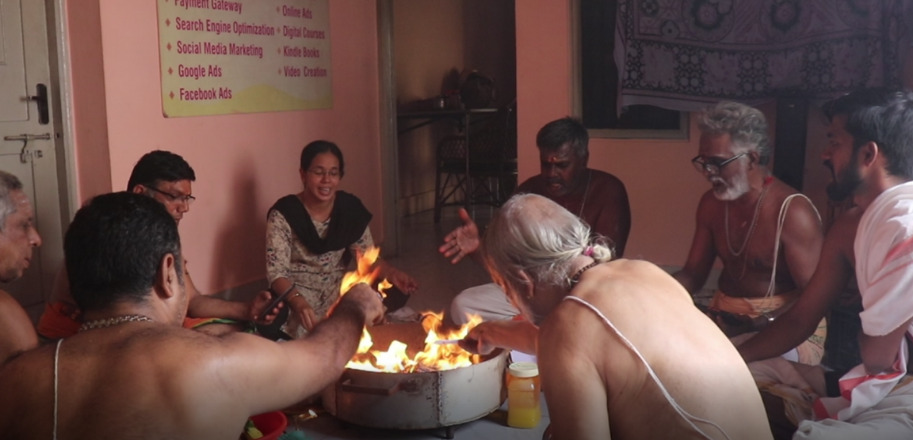
At Swaami Narayanan Temple, Shani Pooja is performed as a personalised Vedic ritual. Your pooja can include:
- Individual Sankalpam (Your Name, Nakshatra, Gothra)
- Personal prayer intention
- Traditional mantra chanting
- Worship performed by dedicated Vedic priests
- Personal live participation
- Completion updates or video proof
The pooja is performed specifically with the devotee’s details rather than treating the prayer as an anonymous general request.
Your Pooja. Your Sankalpam. Your Prayer.
Seek the blessings of Lord Shani with a properly performed personalised Vedic pooja.
Book Your Personalised Shani Pooja
Provide your Name, Nakshatra, Gothra, and prayer intention to arrange your personalised Sankalpam.
Final Guidance
Lord Shani should not be approached only with fear.
Shani represents truth, justice, responsibility, discipline, patience, and the consequences of our choices. A challenging Saturn period may slow external progress, but it can also create deep maturity and stronger foundations.
The correct approach is not panic. It is understanding, responsibility, prayer, practical action, and personalised guidance.