
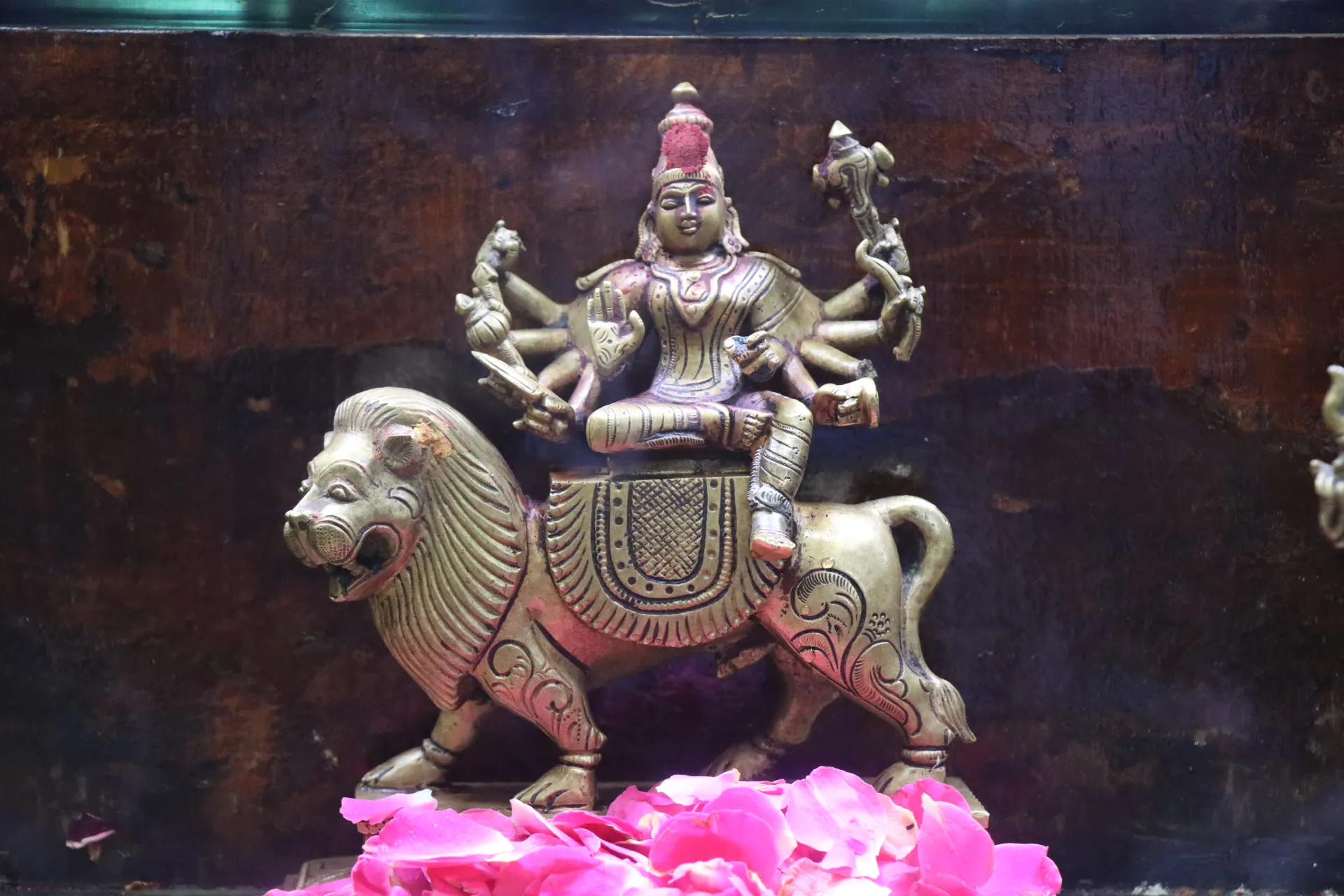
 PERSONALIZED DURGA POOJA
Spiritual and Family Benefits of Navaratri Durga Pooja
Performed personally for you at our temple.
Key Takeaways
- Divine Protection: Offer prayers to Goddess Durga for the protection and well-being of yourself and your loved ones.
- Courage and Inner Strength: Seek the resolve to face uncertainty and difficult situations with faith.
- Spiritual Purification: Reflect on negative habits and cultivate discipline, humility and devotion.
- Personalised Worship: Arrange individual Sankalpam with your Name, Nakshatra and Gothra, with live online participation.
Quick Overview: What Are the Benefits of Navaratri Durga Pooja?
Navaratri Durga Pooja is a devotional practice dedicated to the Divine Mother. Devotees worship Goddess Durga to seek protection, develop courage, strengthen their spiritual discipline and offer prayers for family well-being.
- Protection: Prayers for the care and well-being of loved ones.
- Inner Strength: Devotion centred on courage, determination and perseverance.
- Spiritual Growth: Reflection on personal conduct, habits and spiritual intentions.
- Family Prayers: Worship dedicated to household peace and mutual understanding.
Understanding the Spiritual Benefits of Durga Pooja
In Hindu tradition, Goddess Durga represents Shakti—the divine power associated with strength and protection. Her worship reminds devotees to confront difficulties with courage while remaining grounded in faith and right conduct.
Navaratri creates a dedicated opportunity for prayer, chanting and reflection. Through sincere worship, devotees bring their concerns before the Divine Mother and renew their commitment to a more disciplined and compassionate life. For those seeking personal devotion, personalised Navaratri Durga Pooja offers a way to formally state these prayers.
13 Spiritual Benefits of Performing Navaratri Durga Pooja
Explore the traditional devotional purposes of Durga worship, including protection, courage, family prayers and spiritual growth.
Seeking Divine Protection
- Personal Prayers: Seek Goddess Durga’s blessings for protection during uncertain situations.
- Family Well-being: Offer prayers for the care of children, elders and loved ones.
- Trust in the Divine Mother: Express faith in Her compassionate presence.
- Spiritual Reassurance: Turn to devotion when facing unfamiliar challenges.
Courage and Confidence
- Face Difficulties: Pray for courage when circumstances feel overwhelming.
- Renew Determination: Reflect on the strength needed to keep moving forward.
- Act with Confidence: Seek the resolve to approach responsibilities thoughtfully.
- Persevere with Faith: Remain committed to sincere effort during difficult periods.
Willpower and Self-Discipline
- Regular Worship: Dedicate time to prayer during Navaratri.
- Consistent Practice: Strengthen commitment to daily spiritual observance.
- Self-Control: Reflect on choices, reactions and habits.
- Purposeful Effort: Approach personal responsibilities with greater dedication.
Reflection on Negative Tendencies
- Examine Anger: Recognise reactions that disturb peaceful relationships.
- Reduce Ego: Practise humility in thought and conduct.
- Release Jealousy: Encourage goodwill towards others.
- Cultivate Better Habits: Combine prayer with conscious efforts to improve behaviour.
Strength to Face Recurring Obstacles
- Bring Concerns into Prayer: Include personal difficulties in your Sankalpam.
- Develop Perseverance: Seek the strength to continue constructive efforts.
- Remain Patient: Approach delays without losing commitment.
- Move Forward Thoughtfully: Pair devotional intention with practical action.
Prayers for Family Well-being
- Include Loved Ones: Dedicate prayers to your family.
- Care Across Generations: Remember the needs of children and elders.
- Shared Devotion: Create an occasion for meaningful family worship.
- Seek Household Peace: Pray for a caring and supportive home.
Encouraging Family Harmony
- Mutual Respect: Reflect on how family members treat one another.
- Better Understanding: Approach differences with patience.
- Compassionate Conduct: Encourage kindness in everyday interactions.
- Common Spiritual Intentions: Share prayers for peaceful relationships.
Dedicated Time for Peaceful Reflection
- Pause Daily Routine: Set aside time for worship.
- Quiet Contemplation: Bring attention to your spiritual intentions.
- Focused Prayer: Express concerns and gratitude sincerely.
- Renew Perspective: Return to daily responsibilities with a clearer sense of purpose.
Deepening Faith and Devotion
- Connect with the Divine Mother: Strengthen your devotional relationship with Goddess Durga.
- Sincere Worship: Offer prayers with humility.
- Meaningful Participation: Follow the ritual with attention and reverence.
- Continue Beyond Navaratri: Carry devotional practice into daily life.
Gratitude for Divine Blessings
- Acknowledge Support: Reflect on the blessings and help received in life.
- Express Thanks: Make gratitude part of your prayer.
- Value Loved Ones: Appreciate the people who support you.
- Practise Generosity: Extend kindness through everyday actions.
Commitment to Dharmic Living
- Right Conduct: Reflect on honesty and responsibility.
- Compassion: Consider the well-being of others.
- Humility: Recognise the need for continued personal growth.
- Spiritual Accountability: Align daily choices with your devotional intentions.
Preserving Navaratri Traditions
- Honour Family Customs: Continue meaningful practices passed down by elders.
- Share Cultural Knowledge: Introduce younger generations to Durga worship.
- Participate from Abroad: Maintain a connection with temple worship wherever you live.
- Celebrate with Purpose: Understand the devotional meaning behind the festival.
Renewing Spiritual Intentions
- Personal Sankalpam: State your prayers and purpose for worship.
- Reflect on Priorities: Consider what matters in your spiritual life.
- Begin with Resolve: Commit to consistent prayer and constructive effort.
- Continue Your Journey: Treat Navaratri as an opportunity for ongoing spiritual growth.
Why Do Devotees Perform Navaratri Durga Pooja?
Navaratri is a dedicated period of worship of the Divine Mother. Devotees observe the festival through prayer, chanting and traditional offerings.
Observing Navaratri
Navaratri is a dedicated period of worship of the Divine Mother. Devotees observe the festival through prayer, chanting and traditional offerings.
Seeking Courage During Challenges
Individuals bring concerns about uncertainty, recurring difficulties and important responsibilities into their prayers, seeking strength and perseverance.
Offering Prayers for Loved Ones
Families arrange Durga Pooja to pray for household peace, protection and the well-being of loved ones.
Renewing Devotional Practice
Worship provides an occasion to reflect on personal conduct and reconnect with regular spiritual practice.
Who May Arrange Navaratri Durga Pooja?
Devotees wishing to offer personal or family prayers to Goddess Durga may arrange worship.
Individuals and Families:
Devotees wishing to offer personal or family prayers to Goddess Durga may arrange worship.
Working Professionals:
Those seeking courage, perseverance and a meaningful connection with devotional practice may participate.
NRIs and Devotees Living Abroad:
Devotees who cannot visit the temple can arrange personalised worship and join live online.
Elders and Younger Devotees:
Families can participate together and share the meaning of Navaratri traditions across generations.
Frequently Asked Questions About Navaratri Durga Pooja Benefits
Devotees traditionally pray for protection, courage, inner strength, family well-being and spiritual growth.
Goddess Durga represents divine strength and protection. Navaratri provides a dedicated opportunity for Her worship and spiritual reflection.
Yes. Share your prayer intention with the temple while arranging your personalised Sankalpam.
Yes. Contact the temple to discuss the family members and intentions to include in the ritual.
Share your Name, Nakshatra, Gothra and personal prayer intention. Ask the temple for guidance if any detail is unknown.
Yes. Devotees living abroad can arrange personalised worship through Swami Narayanan Temple.
Yes. The temple offers live online participation for the personalised ritual.
Yes. The temple provides a personal video recording of the ritual.
Pooja involves worship and offerings to the deity. Homam involves sacred fire offerings accompanied by mantra chanting.
In the Durga–Lakshmi–Saraswati observance, the first three days focus on Durga and spiritual purification. Regional and family customs vary.
The benefits describe traditional beliefs and devotional intentions. Worship is an act of faith, and a specific personal outcome cannot be guaranteed.
Visit the temple’s Navaratri Durga Pooja and Homam booking page or use the existing verified temple contact option.